GUIDEIndex: Node hardware, 7 chapters
Blockchain node requirements: 24 chains, from their own docs
Blockchain node requirements range from a few cores and a few hundred gigabytes for Bitcoin-style chains to 16 cores, 256 GB of memory and several NVMe drives for Solana. We read the official operator docs of 24 chains and put CPU, memory, disk and network in one table, with the date each project gives.
Every row links the page the figures come from. Where the official docs are out of date, disagree or say nothing, the row says so instead of guessing.
Each chain has its own anchor, so you can link straight to it, and a link to the dedicated node we run for that chain.
 HeroRPC teamPublished
- Updated
- Docs checked
- Read
- 5 min
Where do you want to start?
In this guideThe quick answer
Quick answer
What hardware does a blockchain node need?
Bitcoin-style chains are the lightest: Zcash's Zebra asks for 4 cores, 16 GB of memory and 300 GB of disk.
Ethereum and EVM chains sit in the middle: Ethereum recommends 2+ / 4+ cores, 16 / 32 GB of memory and 2 / 4 TB NVMe; Arbitrum and BNB Chain want 64 GB of memory.
High-throughput chains are the heaviest: a Solana RPC node needs 16 cores / 32 threads+ and 256 GB+ (512 GB with all indexes) of memory, and Sui and TON ask for 128 GB.
- Disk is NVMe almost everywhere
- L2s also need an Ethereum RPC
- Archive nodes need far more disk
CHAPTER 01
Bitcoin, Litecoin, Dogecoin, Zcash and Monero node requirements
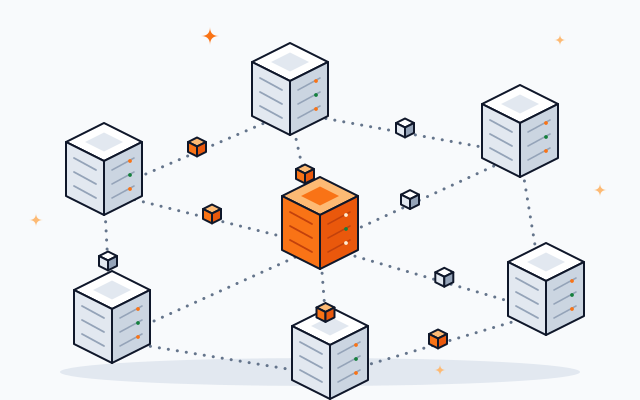
The lightest nodes, and the thinnest official docs.
Bitcoin-style nodes need little CPU or memory; disk is the main cost. Their official docs are the thinnest in this index: bitcoin.org still lists 7 GB of disk, Litecoin's README says 22 GB, and Dogecoin and Monero give almost no hardware figures. Zebra, the Zcash node, is the exception.
CHAPTER 02
Ethereum, L2 and EVM node requirements
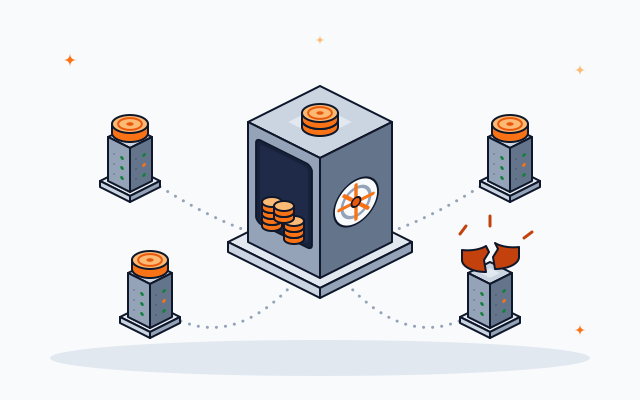
Ethereum, Base, Arbitrum, Optimism, Polygon, BNB Chain and more.
EVM nodes mostly want 8 to 16 cores, 32 to 64 GB of memory and several terabytes of local NVMe. Layer 2 chains (Base, Arbitrum, Optimism, Starknet) also need an Ethereum RPC of their own to follow the main chain.
Not sure whether you need a full or archive node? The archive node guide explains which queries need old state.
CHAPTER 03
Solana, Sui, Aptos, TON, Tron, XRP Ledger, Algorand and Cosmos
From light validators to the heaviest RPC nodes in crypto.
This group has the widest range: an Algorand validator runs on 8 vCPU and 16 GB, while Solana, Sui, Aptos and TON ask for 128 GB of memory or more and fast NVMe disks.
CHAPTER 04
Archive and validator node requirements
Where the docs give separate figures.
Archive nodes keep every past state, so they need far more disk: about 12 TB on Avalanche and TON, and 10 to 16 TB on BNB Chain and Polygon. Validators usually need the same or a little more than a full node, plus steady uptime.
CHAPTER 05
Where the official docs are out of date or silent
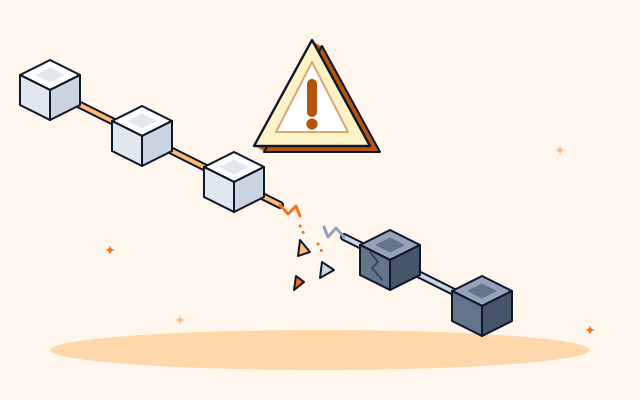
Read every figure with its date.
In 4 of 24 chains, the official figure is plainly out of date; in 2, two official pages disagree; and in 4, the docs leave out most figures. Use the newest dated page, and size your disk for growth, not for today.
- Out of date: bitcoin.org's 7 GB, Litecoin's 22 GB, Optimism's June 2025 sizes and BNB Chain's December 2023 disk figure.
- Disagreeing: Polygon's two hardware pages, BNB Chain's two archive pages, and Tron's docs against its README.
- Silent: Dogecoin and Monero give almost no hardware figures; Linea gives disk only; Aptos gives none for a public fullnode.
CHAPTER 06
How to size a node server

Disk speed first, then memory, then cores.
Pick local NVMe over network disks, buy memory at the recommended figure rather than the minimum, and leave room for a year of chain growth. For L2s, budget for an Ethereum RPC as well.
CHAPTER 07
Skip the hardware: dedicated nodes on HeroRPC
Every chain in this index, on its own server.
HeroRPC runs a dedicated node for every chain in this index, from $139 a month. Each row above links that chain's node page with its exact price.
See every chain and node type on node pricing, or work out what running one yourself costs in the Ethereum node cost guide.
QUESTIONS
Node requirements questions
What are the hardware requirements for an Ethereum node?
ethereum.org recommends 2+ / 4+ cores, 16 / 32 GB of memory and 2 / 4 TB NVMe, with 50 Mbit/s down. The minimum is 2 cores, 16 GB and a 2 TB NVMe disk.
What are the Polygon node requirements?
Polygon's prerequisites page lists 8 / 16 cores, 32 / 64 GB of memory and 4 / 6 TB and 1 Gbit/s for a full node, as minimum and recommended. An older Polygon page gives lower figures, and the snapshot guide suggests an 8 TB disk.
What are the Solana node requirements?
Anza's docs ask for 16 cores / 32 threads+, 256 GB+ (512 GB with all indexes) of memory and separate NVMe disks for accounts and ledger for an RPC node. Validators need 12 cores / 24 threads or more and at least 2 Gbit/s if staked.
What are the Bitcoin node requirements?
Bitcoin's docs list 2 GB of memory and an upload of at least 400 kbit/s, and say the full chain needs several hundred gigabytes. bitcoin.org's 7 GB disk figure only fits a pruned node.
What are the Arbitrum node requirements?
Arbitrum's docs ask for 8 / 16+ cores, 64 / 128 GB DDR5 of memory and several terabytes of local NVMe, plus an Ethereum RPC and beacon endpoint.
What are the Tron node requirements?
Tron's docs list 8 / 16 cores, 16 / 32 GB of memory and 3 / 3.5 TB+ SSD and 100 Mbps. A block-producing Super Representative needs 32 cores and 64 GB.
ABOUT
How we made this guide
In October 2026 we read the official operator docs or repositories of all 24 chains, and only those. Each row shows the date or version the page gives, or "undated". Where a page gave minimum and recommended figures we show both. Unclear tables were re-read on the live page. We did not benchmark the chains ourselves.
Written by
Written and checked by the people who run HeroRPC's builder and node servers. Every figure links to its source.
Published . Last updated .
Get the node without the hardware
A dedicated node for any chain in this index, from $139 a month. Pay in crypto; ready within 24 hours.