GUIDEChains, 6 chapters
What is an appchain? Appchain vs layer 1 vs layer 2
An appchain is a blockchain built for one app or one project. Instead of sharing a chain with thousands of other apps, you get your own: your own validators, your own fee token, and rules you set. It can stand alone, like a layer 1, or lean on a bigger chain, like a layer 2.
We counted what exists on 27 October 2026: Cosmos chains, Avalanche L1s and Ethereum layer 2s, and found that most "layer 2s" are not rollups by L2BEAT's own rules.
Then a plain comparison of layer 1, layer 2 and appchain, what each route costs from published prices, and a four-question way to pick, including when you need no chain at all.
 HeroRPC teamPublished
- Updated
- Counts read
- Read
- 8 min
Where do you want to start?
In this guideThe quick answer
Quick answer
What is an appchain, in short?
An appchain is a blockchain for one app. It runs only that app's transactions, so it never slows down because someone else's game or token is busy.
You set the rules. Fees, block time, which token pays for gas, who can validate. On a shared chain those are fixed for everyone.
You also carry the load. Your chain needs its own validators and its own users. That is the trade.
- Layer 1: a chain that secures itself
- Layer 2: a chain that posts its data to a layer 1
- Appchain: either one, built for a single app
CHAPTER 01
What an appchain is, and why projects build one
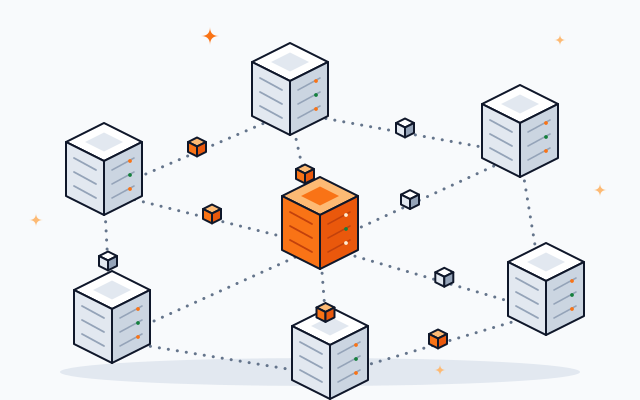
A whole chain for one app, instead of a contract on a shared one.
An appchain, or app-specific blockchain, is a chain that exists to run a single application. Projects build one when a shared chain's fees, speed or rules get in the way, or when they want their own token to pay for gas and their own community to run the validators.
The Cosmos SDK was built for this. Its docs describe it as a way to "build application-specific blockchains" with your own consensus and governance. Avalanche calls the same idea an L1, and Ethereum's version is a layer 2 rollup run for one app.
Reasons to build one
- No noisy neighbours Your users never compete with another app for block space.
- Your own gas token Fees are paid in your coin, not someone else's.
- Your own rules Block time, fees and who validates are yours to set.
What it costs you
- Validators to run Someone has to run the servers that make blocks.
- Users to attract Wallets, bridges and exchanges must add your chain.
- Security to build A new chain is only as safe as its validators.
CHAPTER 02
Layer 1 vs layer 2: the difference
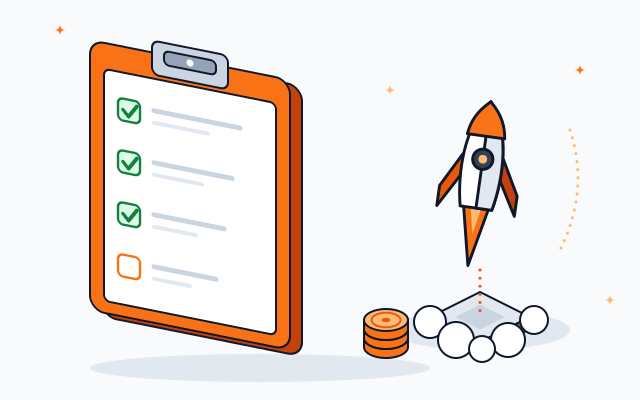
Where security comes from is the whole difference.
A layer 1 secures itself: its own validators or miners decide which blocks are final. A layer 2 runs its own transactions but posts their data to a layer 1, so, in ethereum.org's words, rollups "inherit the security of Ethereum". An appchain can be either.
| Question | Layer 1 (sovereign appchain) | Layer 2 (rollup) |
|---|---|---|
| Who makes blocks final | Its own validators | The layer 1 it posts to |
| Gas paid in | Your own coin | Usually ETH, sometimes your coin |
| Extra fees | Only your validators' costs | Layer 1 data fees, often a revenue share |
| Shares liquidity with a big chain | Needs a bridge | Built in |
| Can change any rule | Yes | Within the layer 1's limits |
Examples of the left column: Cosmos SDK chains and Avalanche L1s. Of the right: OP Stack and Arbitrum chains.
Most "layer 2s" are not rollups yet
On 27 October 2026, L2BEAT listed 94 projects in its summary. Only 22 counted as rollups (10 optimistic, 12 zero-knowledge). 69 were filed as "Others": chains that call themselves layer 2 but do not meet L2BEAT's requirements, often because users cannot exit without trusting the operator.
CHAPTER 03
How many appchains exist today
Counted on 27 October 2026 from each ecosystem's own data.
On 27 October 2026 the Cosmos chain registry listed 268 mainnet chains. Avalanche's data API listed 579 subnets, of which 341 had converted to L1s. L2BEAT tracked 94 Ethereum scaling projects.
| Ecosystem | Count | What we counted |
|---|---|---|
| Cosmos | 268 | Mainnet chain folders in the Cosmos chain registry, which wallets and explorers read |
| Avalanche | 341 L1s | Of 579 subnets listed by Avalanche's data API, the ones converted to sovereign L1s |
| Ethereum layer 2 | 94 | Projects in L2BEAT's summary; 22 of them qualify as rollups |
A registry or tracker only lists chains someone added. Small private chains are often missing, so treat these as floors.
The point is not the exact numbers. It is that launching your own chain is normal now: hundreds of projects have done it on each of these stacks.
CHAPTER 04
Three ways to launch an appchain, and what they cost
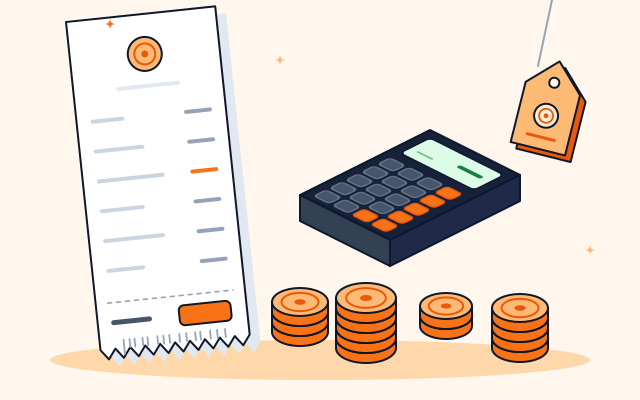
Cosmos SDK, Avalanche L1, or an Ethereum rollup.
A Cosmos SDK chain or an Avalanche L1 is a sovereign layer 1 you run with your own validators. An Ethereum rollup posts to Ethereum and usually goes through a rollup provider. Published prices put managed rollups and managed L1s in the hundreds to thousands of dollars a month; a sovereign chain costs what its servers cost.
| Route | Security | Ongoing costs we could verify | Licence or fee terms |
|---|---|---|---|
| Cosmos SDK chain | Your validators | Your servers only | Apache-2.0 code (Cosmos EVM) |
| Avalanche L1 | Your validators | About 1.33 AVAX a month per validator at the minimum fee, plus servers | Fee set by ACP-77 |
| OP Stack rollup | Ethereum | Ethereum data fees, plus a provider | MIT code |
| Arbitrum chain | Ethereum or Arbitrum | Ethereum data fees, plus a provider | 10 percent of net revenue if it settles outside Arbitrum One or Nova |
| Managed rollup (Conduit) | Ethereum | $250 a month for a trial testnet; mainnet on request | Plus 5 percent of sequencer profit |
| Managed Avalanche L1 (Cogitus) | Your validators | $995 a month the first year, then $1,995 | 5 validators on mainnet |
Prices from each provider's own page, checked October 2026. Most rollup providers publish no mainnet price at all.
For the EVM routes in detail, see how to create an EVM blockchain. For Avalanche, how to create an Avalanche L1 works through the validator fee.
CHAPTER 05
Appchain, layer 2, or no chain at all?
Four questions. The first one saves most people a lot of money.
If you only need a token, you need no chain: launch a token on an existing chain. If your users and money are on Ethereum, a layer 2 keeps you close to them. If you want your own coin to pay fees and your own validators, build a sovereign appchain.
Question 1: Do you need more than a token, like your own fees, rules or block space?
NOA token on an existing chain is enough
YESGo to 2
Question 2: Do your users and their money already live on Ethereum?
NOGo to 3
YESA layer 2 rollup keeps you close
Question 3: Do you want to join the Avalanche network of chains and its wallets?
NOGo to 4
YESAn Avalanche L1
Question 4: Do your users expect MetaMask and Ethereum tools?
NOA Cosmos SDK appchain
YESYour own EVM chain
Only want a coin people can buy and hold? The meme coin guide covers launching a token without a chain of your own.
CHAPTER 06
Launching an appchain with HeroRPC
Sovereign chains, launched for you. We do not build rollups.
HeroRPC launches sovereign appchains: your own EVM chain from $149, an Avalanche L1 from $149, or a Cosmos SDK chain from $249, one-time. You pick the base and the rules in the builder and see the full price before you pay. We do not build rollups on Ethereum.
If a rollup is what you need, a rollup provider is the better fit, and the table above shows what the published ones charge. If you want your own chain with your own coin, open the builder or read how to create a cryptocurrency first.
QUESTIONS
Appchain questions
What is an appchain in simple terms?
A blockchain that exists to run one app. It has its own validators, fees and rules, instead of sharing a chain with thousands of other apps.
What is the difference between layer 1 and layer 2?
A layer 1 secures itself with its own validators or miners. A layer 2 runs transactions on its own chain but posts their data to a layer 1, which secures it. Ethereum and Bitcoin are layer 1s; Arbitrum and Optimism are layer 2s.
Is an appchain a layer 1 or a layer 2?
Either. A Cosmos SDK chain or an Avalanche L1 is a sovereign layer 1. A rollup built for one app is a layer 2 appchain.
Appchain vs rollup: which is better?
Neither in general. A rollup gives you Ethereum's security and users but adds data fees and provider terms. A sovereign appchain gives you full control and your own fee coin, but you must bring the validators and the users.
How many appchains are there?
On 27 October 2026, the Cosmos chain registry listed 268 mainnet chains and Avalanche's data API listed 341 L1s. L2BEAT tracked 94 Ethereum scaling projects.
How much does it cost to launch an appchain?
Published managed services run from a $250 a month rollup testnet to $1,995 a month for a managed Avalanche L1 mainnet. With HeroRPC, a sovereign chain starts from $149 one-time.
Does HeroRPC build rollups?
No. We launch sovereign chains: EVM, Avalanche L1, Cosmos SDK and others. For an Ethereum rollup, use a rollup provider.
ABOUT
How we made this guide
On 27 October 2026 we counted the mainnet chain folders in the Cosmos chain registry on GitHub, paged through every subnet in Avalanche's data API and counted those converted to L1s, and read L2BEAT's scaling summary. Route prices and licence terms come from each provider's or project's own page, checked in October 2026 or as dated in our research. HeroRPC prices are our own list prices.
Written by
Written and checked by the people who run HeroRPC's builder and node servers. Every figure links to its source.
Published . Last updated .
Launch your own appchain
Your own EVM, Avalanche L1 or Cosmos chain, from $149 one-time. Pick a base, set your rules, see the full price before you pay.