GUIDEEVM chains, 6 chapters
Create an EVM blockchain: four ways, compared
To create an EVM blockchain, you pick one of four routes: run your own Ethereum-style chain, build on Cosmos EVM, launch an Avalanche L1, or deploy a rollup on top of another chain. All four run Solidity contracts and work with MetaMask. They differ in who runs the validators, what it costs each month and how much of the chain is truly yours.
We compared the four routes on the things that decide a launch: who makes the blocks, the software license, published prices for managed versions, and the work left for you.
Then comes the part tutorials skip: a chain ID nobody else uses, a public RPC, an explorer, a faucet and a listing so wallets can add your network.
 HeroRPC teamPublished
- Updated
- Prices checked
- Read
- 7 min
Where do you want to start?
In this guideThe quick answer
Quick answer
How do you create an EVM blockchain?
Choose a route: your own Ethereum-style chain (most control), Cosmos EVM (staking and links to other Cosmos chains), an Avalanche L1, or a rollup that settles on another chain.
Set the genesis: a unique chain ID, the coin symbol, the starting supply and the validators that make blocks.
Make it usable: a public RPC endpoint, a block explorer, a faucet and a chain listing, so MetaMask and other wallets can add your network.
- Four routes, all run Solidity
- A unique chain ID is a must
- RPC, explorer and faucet before launch
CHAPTER 01
What an EVM blockchain is
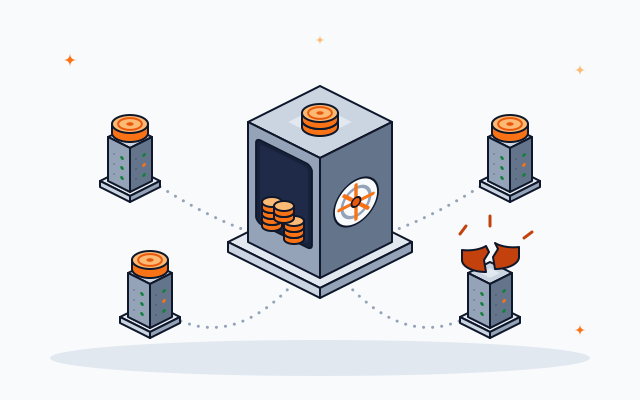
A chain that runs Ethereum's smart-contract engine.
An EVM blockchain runs the Ethereum Virtual Machine, the engine that executes Solidity smart contracts. Contracts, tools and wallets built for Ethereum work on it with little or no change, which is why most new chains choose it.
EVM compatibility is about the contract engine, not about sharing Ethereum's network. Your chain has its own blocks, its own coin for fees and its own validators. Ethereum apps simply run on it.
What you get for free
Solidity, Hardhat and Foundry, MetaMask, block explorers built for EVM chains, and millions of lines of tested contracts.
What you still decide
Who makes blocks, how fast, what fees cost, how many coins exist and who holds them at launch.
CHAPTER 02
Four ways to create an EVM blockchain
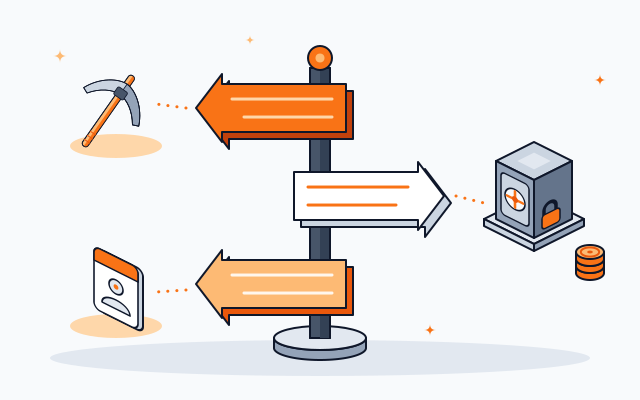
Own L1, Cosmos EVM, Avalanche L1 or a rollup.
You can run your own Ethereum-style L1 (from Geth, BNB Chain's client or Besu), build an L1 on Cosmos EVM, launch an Avalanche L1, or deploy a rollup with the OP Stack or Arbitrum Nitro. L1 routes give you your own validators; rollups borrow security from the chain they settle on.
| Route | Who makes blocks | Code and license | Watch out for |
|---|---|---|---|
| Own Ethereum-style L1 | Your validators (authority or stake) | go-ethereum LGPL-3.0, BNB Chain LGPL-3.0, Besu Apache-2.0 | You run everything; current Geth runs only proof of stake |
| Cosmos EVM | Validators who stake your coin | cosmos/evm, Apache-2.0 | Cosmos tooling to learn alongside EVM |
| Avalanche L1 | Your validators on Avalanche | avalanchego, BSD-3-Clause | Validators pay an ongoing fee in AVAX |
| Rollup (OP Stack, Arbitrum Nitro) | A sequencer; settles on another chain | OP Stack MIT; Nitro under its own license | Arbitrum chains settling outside Arbitrum One and Nova share 10 percent of net revenue |
Licenses from GitHub; Arbitrum rule from its licensing page; checked October 2026.
The Avalanche route has its own walk-through in Create an Avalanche L1. A chain only your company or partners will run is covered in the private blockchain guide.
CHAPTER 03
Pick your route in three questions
Settlement, staking, then who runs it.
If you want to settle on Ethereum or Arbitrum, build a rollup. If you want holders to stake and your chain to link to other Cosmos chains, use Cosmos EVM. Otherwise, run your own Ethereum-style L1, the simplest chain to own outright.
Question 1: Must your chain settle on Ethereum or another big chain?
NOGo to 2
YESA rollup (OP Stack or Arbitrum)
Question 2: Should holders stake your coin to secure the chain?
NOGo to 3
YESCosmos EVM, or an Ethereum-style chain on proof of stake
Question 3: Do you want to own every validator and pay no ongoing network fee?
NOAn Avalanche L1
YESYour own Ethereum-style L1
CHAPTER 04
What an EVM blockchain costs

Free software; you pay for servers, a managed service or both.
The software for every route is free to use, so the cost is servers and upkeep, or a managed service. Published managed prices start at $250 a month for a rollup trial testnet and $1,995 a month for a managed Avalanche L1 mainnet. A HeroRPC Ethereum-style chain is $149 one-time plus hosting per server.
| Option | Price | Notes |
|---|---|---|
| Self-run, any route | Free software, plus your servers | You set up, secure and upgrade everything |
| Conduit managed rollup | $250 a month trial testnet; mainnet on request | Paid plans add 5 percent of sequencer profit |
| Cogitus managed Avalanche L1 | $50 a month devnet; mainnet $995 a month for year one, then $1,995 | 5 validators on mainnet; minimum activity required |
| HeroRPC Ethereum-style L1 | $149 one-time, plus hosting per server | Your servers; you get the logins |
From Conduit and Cogitus pricing pages (undated, checked October 2026). Our price is from our live price list; hosting is shown in the builder before you pay.
Count the extras too: an explorer, a faucet and a bridge are separate pieces on most routes. On a rollup, the settlement chain's fees are also an ongoing cost.
CHAPTER 05
What a working EVM chain needs at launch

Chain ID, RPC, explorer, faucet, wallet listing.
A usable EVM chain needs a chain ID no other network uses, validators, a public RPC endpoint, a block explorer, a faucet or another way to get gas, and a listing in the public chain registry so wallets recognise it.
Claim a unique chain ID
Wallets use the chain ID to keep transactions from being replayed on another network. The ethereum-lists/chains registry, which feeds chainlist and chainid.network, gives each ID to the first chain that claims it by pull request, and never deletes a chain, only marks it deprecated. Search it before you pick your number.
MetaMask adds a network from four fields: the RPC URL, the chain ID, the currency symbol and the explorer URL. Put them on your website in one place so users can copy them.
CHAPTER 06
An EVM blockchain with HeroRPC
Ethereum or BNB base, your chain ID, launched automatically.
HeroRPC launches your own Ethereum-style or BNB-style L1 for $149 one-time. You set the chain ID, symbol, block time and starting supply. It starts on three validators with proof of authority, or four with proof of stake.
Add what a public chain needs: a block explorer ($149), a web wallet ($149), a faucet ($79), your own swap ($599) and a bridge ($999).
You get the logins to every server, and we never hold your private keys. Setting the first block? The genesis block guide explains each field.
QUESTIONS
EVM blockchain questions
How do I create my own EVM blockchain?
Pick a route (your own Ethereum-style L1, Cosmos EVM, an Avalanche L1 or a rollup), set a genesis with a unique chain ID and your validators, then add a public RPC, a block explorer and a faucet so people can use it.
What is an EVM compatible blockchain?
A blockchain that runs the Ethereum Virtual Machine, so Solidity contracts, Ethereum tools and wallets like MetaMask work on it. It has its own network, coin and validators.
How do I choose a chain ID?
Pick a number that no network in the public ethereum-lists/chains registry uses, then claim it there by pull request. The first chain to claim an ID keeps it.
Should I build an L1 or a rollup?
A rollup settles on another chain and borrows its security, but pays its fees and may carry revenue terms. An L1 has its own validators and no settlement costs, and you are responsible for its security.
How much does it cost to create an EVM blockchain?
The software is free. Managed rollups start at $250 a month for a trial testnet, and a managed Avalanche L1 mainnet is $1,995 a month after its first year. A HeroRPC chain is $149 one-time plus hosting.
Can I use MetaMask with my own chain?
Yes. Users add it with your RPC URL, chain ID, currency symbol and explorer URL. A button on your website can add it in one click.
ABOUT
How we made this guide
In October 2026 we read the Cosmos EVM and Avalanche build guides, the Arbitrum licensing page, the ethereum-lists/chains registry rules, Conduit's and Cogitus's pricing pages, and each project's license and latest release through the GitHub API. Prices are list prices before tax.
Written by
Written and checked by the people who run HeroRPC's builder and node servers. Every figure links to its source.
Published . Last updated .
Launch your EVM chain
Your own Ethereum-style chain with your chain ID and validators, $149 one-time. You get the server logins.