GUIDEPrivate chains, 7 chapters
Private blockchain: what it is and how to build one
A private blockchain is a blockchain where you decide who can run it, who can read it and who can send transactions. It suits a group of companies that share records but do not want one of them to own the database. For a single company, a normal database is usually the better tool.
We start with a test the US government published for exactly this question, because most private chain projects should end at a database.
If yours passes, you get the tools that still work in 2026 (some popular tutorials no longer do), how many validators to run, and what it costs to build or rent one.
 HeroRPC teamPublished
- Updated
- Tools checked
- Read
- 9 min
Where do you want to start?
In this guideThe quick answer
Quick answer
What is a private blockchain?
A private blockchain (also called permissioned) only lets approved parties run the nodes that make blocks. It can also limit who reads the data and who sends transactions.
You need one when several organizations must write to the same records and none of them should control the database alone. If one company owns the data, a database is cheaper and simpler.
To build one, most teams use proof of authority: a fixed list of known validators that take turns making blocks. Plan for at least four validators if they are run by parties that do not fully trust each other.
- Known validators, no mining or staking
- 4 validators to survive a bad actor
- A database is often the better answer
CHAPTER 01
Public, private and consortium blockchains
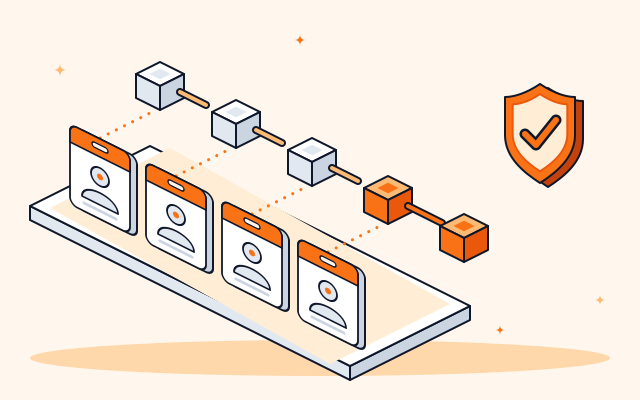
The difference is who may make blocks, read and send.
On a public blockchain anyone can run a node, read every transaction and send one. On a private blockchain an authority approves who makes blocks, and can also restrict reading and sending. A consortium chain is a private chain run jointly by several organizations.
NIST puts the line at block making: on a permissioned network, the users who publish blocks must be authorized. Reading and sending can then be open to everyone or limited to approved users. That choice is yours to make.
| Chain page | Public | Private | Consortium |
|---|---|---|---|
| Who makes blocks | Anyone who mines or stakes | One organization's nodes | Approved members' nodes |
| Who can read | Everyone | You decide | Members, or everyone if they agree |
| Coin with a market price | Usually | Rarely needed | Rarely needed |
| Who it suits | Open money and apps | Testing, internal ledgers | Shared records between firms |
Based on the permissioned and permissionless definitions in NIST IR 8202.
A private chain still keeps an append-only history with every block linked to the one before. What changes is trust: instead of thousands of strangers, a short list of known parties keeps the chain honest.
CHAPTER 02
Do you need a private blockchain at all?
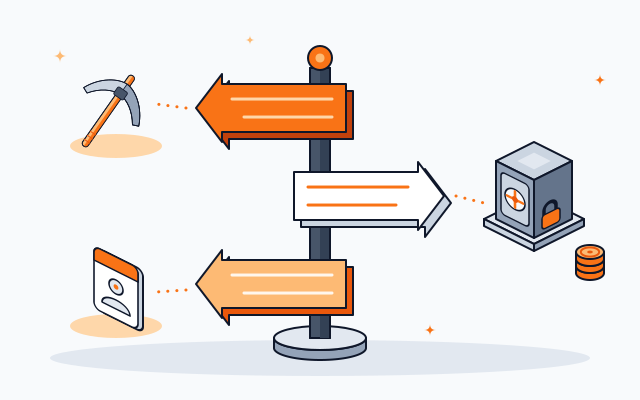
Six questions from the US government. Most projects stop early.
You may need a blockchain only if several parties write to one shared record, nothing is ever edited or deleted, no personal data goes on it, the writers cannot agree who should run the database, and you want a log nobody can tamper with. Any "no" points to a database instead.
The test below follows a flowchart by the US Department of Homeland Security, reproduced by NIST in its blockchain overview.
Question 1: Do several parties need one shared, consistent record?
NOEmail or a spreadsheet will do
YESGo to 2
Question 2: Does more than one organization write to it?
NOUse a database
YESGo to 3
Question 3: Once written, are records never changed or deleted?
NOUse a database
YESGo to 4
Question 4: Will you keep personal or sensitive data off it?
NOUse an encrypted database
YESGo to 5
Question 5: Do the writers disagree about who should control the database?
NOUse a managed database
YESGo to 6
Question 6: Do you want a tamper-proof log of every write?
NOUse a database
YESA blockchain may fit
Question 5 is the one that decides most cases. If one company will run the system anyway, the blockchain adds cost and gives nothing back.
CHAPTER 03
How to build a private blockchain in 2026
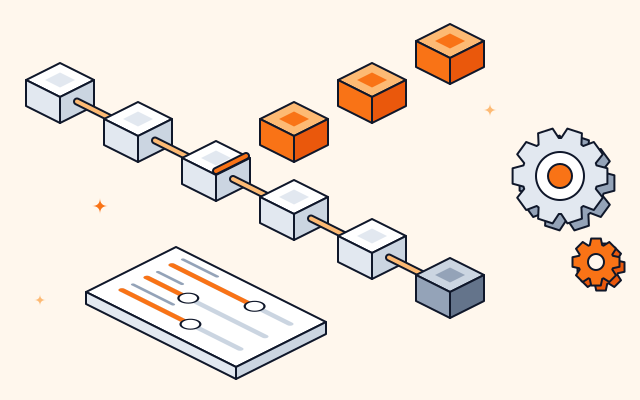
Some popular tutorials teach setups that no longer run.
Today the common routes are Hyperledger Besu with QBFT or IBFT 2.0 proof of authority, Hyperledger Fabric for business ledgers without a coin, or a managed service. Geth, the most used Ethereum client, has not offered proof of authority since version 1.14.
| Route | What you get | Watch out for |
|---|---|---|
| Besu, QBFT or IBFT 2.0 | An Ethereum-style chain with smart contracts and instant finality | Needs 4 validators for fault tolerance; you run and secure it |
| Geth | Proof of stake only, with a separate consensus client | No proof of authority any more; more moving parts |
| Hyperledger Fabric | A permissioned ledger with private channels; code in Go, Java or Node.js | No Ethereum tooling or wallets; no coin built in |
| Managed service | Someone else runs the nodes | Monthly fees; check who holds the keys |
Besu's own tutorial warns that it creates a network that is "isolated, but not protected or secure". The QBFT tutorial tells you to run it behind a properly configured firewall and to keep private keys out of the genesis file. Treat every tutorial as a starting point, not a production setup.
Setting up the first block? The genesis block guide explains each field of the file every Ethereum-style chain starts from.
CHAPTER 04
How many validators a private chain needs
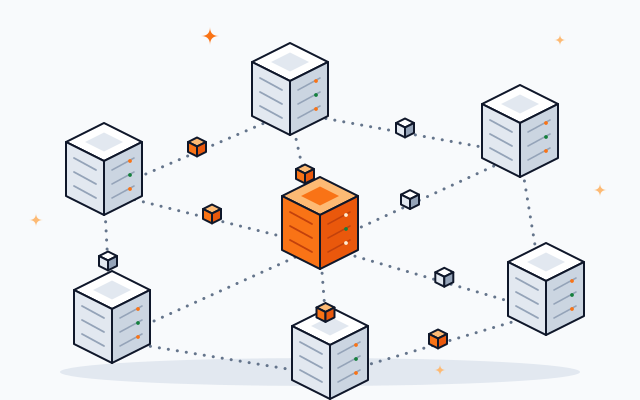
Four is the floor if the validators do not trust each other.
With QBFT or IBFT 2.0, at least two thirds of validators must be online to make blocks. Four validators is the smallest network that survives one failed or dishonest validator.
| Validators | Can be down at once | Good for |
|---|---|---|
| 3 or fewer | Not guaranteed | Testing, or validators you all control |
| 4 to 5 | 1 | A small consortium |
| 6 to 8 | 2 | Members who want more slack |
From the Besu proof of authority docs, checked October 2026. Besu says three or fewer validators can make blocks but do not guarantee finality if a validator misbehaves.
Put each validator with a different member, on a different server and, ideally, with a different hosting company. A chain where one company runs every validator is a database with extra steps.
CHAPTER 05
What a private blockchain costs
Servers and your time, or a monthly managed bill.
The software is free and open source, so the cost is servers and the time to run them. A managed private chain at Kaleido starts at about $115.20 a month for one small node on its free membership. A HeroRPC proof-of-authority chain is a one-time build of $149, plus monthly hosting per server shown before you pay.
| Option | Price | Who runs the nodes |
|---|---|---|
| Self-run, Besu or Fabric | Free software, plus your servers | You |
| Kaleido, Developer plan | $0.15 an hour per small node, about $115.20 a month | Kaleido |
| Kaleido, Business plan | $49 a month plus $0.55 an hour per node, about $445 for one | Kaleido |
| HeroRPC proof of authority | $149 one-time build, hosting per server | Your servers; you get the logins |
Kaleido from its pricing page (undated, checked October 2026), before storage and support. Monthly figures assume 720 hours.
Custom builds by development agencies are quoted in the tens of thousands of dollars. That buys software written for you, which most private chains do not need: the open-source clients already do the hard part.
Count your own hours too. Someone has to apply client updates, watch disk space, rotate validator keys and handle members joining or leaving.
CHAPTER 06
Private blockchain launch checklist

What to settle before the first block.
Before launch, agree on the members and validator rules, keep personal data off the chain, lock the network behind a firewall, keep keys out of the genesis file, and plan backups and upgrades.
CHAPTER 07
A private proof-of-authority chain with HeroRPC
Pick proof of authority, choose your validators, launch.
HeroRPC builds an Ethereum-style or BNB-style chain on proof of authority for $149 one-time. It starts with three validators, and you can add more. You get the logins to every server, so you decide who can connect.
Validators you control yourself can start at three. If they will be run by members who do not fully trust each other, add more so you reach four, the fault-tolerance floor in the Besu docs.
Because you hold the server logins, you can close the network to the public and open it only to your members. We never hold your private keys. The explorer and wallet add-ons are optional: skip them, or keep them for members only.
Choosing the consensus? Proof of work vs proof of stake explains where proof of authority fits.
QUESTIONS
Private blockchain questions
What is a private blockchain?
A blockchain where an authority approves who runs the nodes that make blocks, and can also limit who reads the data and sends transactions. It is also called a permissioned blockchain.
What is the difference between a private and a public blockchain?
On a public chain anyone can make blocks, read and send. On a private chain only approved parties make blocks, and reading and sending can be limited too. Public chains rely on many strangers; private chains on a few known parties.
Can I create a private blockchain with Geth?
Not with proof of authority any more. The Geth docs say Clique is not an option since v1.14, and Geth now runs private networks only on proof of stake with a separate consensus client. Besu with QBFT or IBFT 2.0 is the usual choice.
How many nodes does a private blockchain need?
For QBFT or IBFT 2.0, at least 4 validators to tolerate one failed or dishonest validator, per the Besu docs. Four or five validators tolerate one down; six to eight tolerate two.
Does a private blockchain need a cryptocurrency?
No. Hyperledger Fabric runs without one, and a proof-of-authority chain can set transaction fees to zero or use a coin only as an internal unit. A private chain's coin usually has no market price.
Is a private blockchain secure?
Only once you secure it. Besu's tutorial networks are "isolated, but not protected or secure" until you add a firewall and keep keys safe. Its security also depends on validators not colluding, which is why they should be spread across members.
ABOUT
How we made this guide
In October 2026 we read NIST IR 8202 (including the DHS flowchart it reproduces), the Geth private network page, the Besu proof of authority and QBFT pages, the Hyperledger Fabric overview and Kaleido's pricing page. We describe the tools as their own docs do today. HeroRPC prices come from our live price list.
Written by
Written and checked by the people who run HeroRPC's builder and node servers. Every figure links to its source.
Published . Last updated .
Launch a private proof-of-authority chain
Choose your validators and launch an Ethereum-style chain for $149 one-time. You get the server logins.