GUIDEMining pools, 7 chapters
Mining pool payouts: PPS vs PPLNS, explained
Mining pool payouts decide who carries the luck. Under PPS the pool pays for every share and takes the risk of slow blocks. Under PPLNS miners are paid when the pool finds a block, so the pool never pays from its own pocket. For a new coin's pool, that difference decides how much money you need before you open.
We worked from the standard analysis of pool reward systems by Meni Rosenfeld, which gives the formula for the reserve a PPS pool needs so it does not go broke.
Our calculator runs that maths on your own block time, reward and fee. You also get each scheme in plain words and what pool hopping is.
 HeroRPC teamPublished
- Updated
- Research checked
- Read
- 7 min
Where do you want to start?
In this guideThe quick answer
Quick answer
PPS or PPLNS: what is the difference?
PPS (pay per share) pays miners a fixed amount for every share they submit, straight away. The pool operator pays from their own coins and carries the risk of slow blocks.
PPLNS (pay per last N shares) pays only when the pool finds a block, split across the last N shares. Miners carry the luck; the operator carries none.
For a new coin, PPLNS is the safer choice. A PPS pool at a 1 percent fee needs about 230 block rewards set aside to keep its risk of running dry under 1 percent.
- PPS: steady pay, operator takes the risk
- PPLNS: pay when blocks are found, no operator risk
- New coin: PPLNS
CHAPTER 01
Mining pool payout methods compared
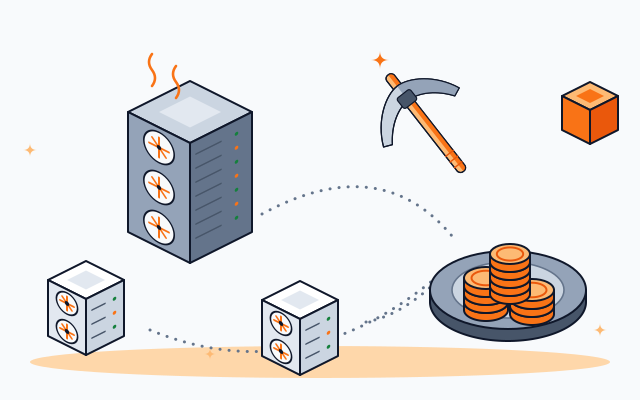
Five schemes, one question: who carries the luck?
Pool payout methods differ in when miners are paid and who carries the luck of slow blocks. PPS, FPPS and PPS+ pay per share and put the risk on the operator. PPLNS and PROP pay when a block is found and leave the luck with miners.
A share is a piece of work that proves a miner is hashing for the pool. It is far easier to find than a block, so the pool counts shares to measure each miner's effort.
| Scheme | How miners are paid | Who carries the luck | Can be gamed by hopping |
|---|---|---|---|
| PROP (proportional) | Each block is split by shares in that round | Miners | Yes |
| PPS (pay per share) | A fixed amount for every share, right away | The operator | No |
| FPPS (full pay per share) | Like PPS, plus an estimate of transaction fees | The operator | No |
| PPS+ | Block reward per share; transaction fees when blocks are found | Mostly the operator | No |
| PPLNS (pay per last N shares) | Each block is split across the last N shares | Miners | Resists it |
From Rosenfeld's analysis (2011) and Hashrate Index (updated Dec 2023), checked October 2026. Exact rules vary from pool to pool.
FPPS and PPS+ exist mainly for Bitcoin, where transaction fees are a large part of each block. On a new coin, fees are usually tiny, so the choice comes down to PPS or PPLNS.
CHAPTER 02
How PPLNS works
A sliding window of recent shares shares each block.
PPLNS keeps a sliding window of the last N shares. When the pool finds a block, the reward (minus the fee) is split across the shares in that window, whoever submitted them. Shares older than the window earn nothing more.
- Step 1: Miners submit sharesEach share goes into the window; the oldest share drops out.
- Step 2: The pool finds a blockIts reward waits until the coins mature and can be spent.
- Step 3: The window is paidEach share in the last N gets an equal part of the reward after the fee.
- Step 4: Miners are paid outOnce a miner's balance passes the minimum payout, it is sent to their address.
Rosenfeld shows that each share is worth the same on average under PPLNS, and that a bigger window N smooths payouts. A miner who leaves stops earning when their shares slide out of the window, so short visits do not pay extra.
CHAPTER 03
What PPS costs the pool operator

Pay every share up front, and hold a reserve for slow weeks.
A PPS operator pays miners before the pool finds blocks, so slow stretches are paid from the operator's own coins. Rosenfeld's formula says that at a 1 percent fee, keeping the chance of running dry under 1 percent takes a reserve of about 230 block rewards.
Rosenfeld shows that a PPS operator takes on the same ups and downs as one miner holding the whole pool's hash power. If the fee and the reserve are not balanced, the pool "has a good chance of eventually going bankrupt". His reserve formula is R = B ln(1/δ) / (2f), where B is the block reward, f the fee and δ the risk of running dry you accept.
| Pool fee | Reserve | At 10 percent of a 150-second chain |
|---|---|---|
| 1 percent | 230 block rewards | 4.0 days |
| 2 percent | 115 block rewards | 2.0 days |
| 3 percent | 77 block rewards | 1.3 days |
Calculated with Rosenfeld's formula. The reserve in coins does not depend on hash power; how many days it covers does.
This is why big Bitcoin pools can offer PPS and a new coin's pool usually cannot. Few new pool operators hold hundreds of block rewards of their own coin before launch, and the coin's price can move while they wait.
CHAPTER 04
Work out PPLNS and PPS for your coin
Your block time, reward and fee in; blocks, dry spells and reserves out.
Enter your block time, block reward, your pool's share of all mining and the fee. The calculator shows how many blocks the pool finds a day, how often a PPLNS miner would go a day or a week without pay, and the reserve PPS would need.
Try the 1 percent share. A small pool on a big chain finds few blocks, so PPLNS miners see dry days often, and a PPS operator's reserve covers weeks instead of hours. On a new coin, your pool is often most of the network, which makes PPLNS payouts steady.
CHAPTER 05
Pool hopping, and why PPLNS resists it
Miners who jump in early and out late can drain a proportional pool.
Pool hopping is mining at a proportional (PROP) pool only early in each round, when shares are worth the most, then leaving. It takes pay from loyal miners. PPLNS resists it because each share is worth the same whenever it was sent.
Rosenfeld proves that any scheme which splits a fixed block reward among the miners of the current round can be gamed this way, unless it pays only the share that found the block (which is solo mining). PPLNS avoids the trap by paying recent shares rather than "this round's" shares.
CHAPTER 06
Which payout scheme suits a new coin
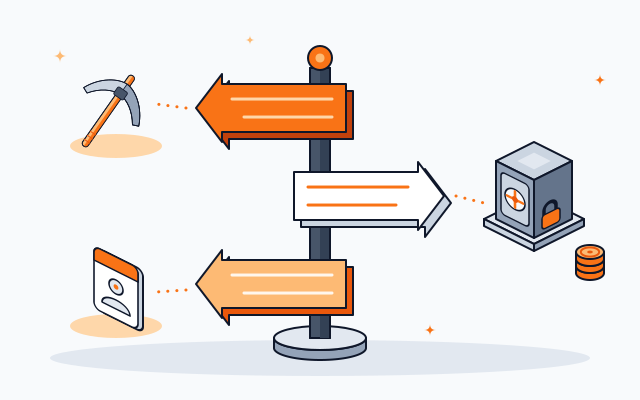
PPLNS, a modest fee and a clear minimum payout.
For a new coin's pool, use PPLNS with a modest fee, often about 1 percent. It needs no reserve, resists hopping, and pays only from blocks the pool actually finds. Publish the fee, the window and the minimum payout before miners join.
Pool software matters too. Several popular open-source pools are no longer maintained: Miningcore was archived in 2023, so check the status of any software before you build on it.
CHAPTER 07
The HeroRPC mining pool add-on
PPLNS payouts, your fee, no cut for us.
The HeroRPC mining pool add-on is $249 one-time for proof-of-work coins. It pays miners by PPLNS, you set the pool fee, and the fee goes to you. HeroRPC takes no share of mining.
See how it works on the mining pool add-on page. Launching a mined coin from scratch? Mine your own cryptocurrency covers what else miners need.
QUESTIONS
Mining pool payout questions
What is the difference between PPS and PPLNS?
PPS pays a fixed amount for every share right away, and the pool operator carries the risk of slow blocks. PPLNS pays when the pool finds a block, split across the last N shares, so miners carry the luck and the operator needs no reserve.
Is PPS or PPLNS better for miners?
PPS gives steadier pay but usually a higher fee, because the operator takes the risk. PPLNS has lower fees and pays the same on average, with more ups and downs. Miners who stay with one pool for a long time often prefer PPLNS.
What is FPPS?
Full pay per share. It works like PPS but also pays an estimate of the transaction fees in each block. It matters mostly on Bitcoin, where fees are a large part of block rewards.
What does N mean in PPLNS?
N is the number of recent shares that share each block reward. A bigger N smooths payouts but means a new miner waits longer to reach full earnings, and a leaving miner keeps earning a little longer.
What is pool hopping?
Mining at a proportional pool only early in each round, when shares are worth the most, and leaving later. It takes pay from loyal miners. PPLNS removes the advantage.
Why do new pools use PPLNS?
It pays only from blocks the pool actually finds, so the operator needs no reserve. A PPS pool at a 1 percent fee needs about 230 block rewards set aside to keep its risk of running dry under 1 percent.
ABOUT
How we made this guide
In October 2026 we read Meni Rosenfeld's "Analysis of Bitcoin Pooled Mining Reward Systems" (arXiv:1112.4980) and Hashrate Index's guide to PPS, FPPS, PPLNS and PPS+. Reserves and dry-spell chances are calculated with Rosenfeld's formulas, treating blocks as random arrivals; they are expected values, not measurements from a live pool.
Written by
Written and checked by the people who run HeroRPC's builder and node servers. Every figure links to its source.
Published . Last updated .
Open a pool for your coin
PPLNS payouts and a fee that goes to you. The pool add-on is $249 one-time.