GUIDEForks, 6 chapters
Best coin to fork: which blockchain to start from
The best coin to fork is the one whose rules already match the coin you want: mined or staked, plain or with masternodes, with or without smart contracts. Supply, block time and rewards can be changed in any fork. The mining algorithm, the features and the code you will maintain come with the base.
We compared eleven code bases from their own repositories: the license, how recently each one shipped a release, and the block rules written in the code itself.
You also get the one risk most fork guides leave out: a small coin that shares its mining algorithm with a giant can be attacked with rented hash power.
 HeroRPC teamPublished
- Updated
- Code checked
- Read
- 7 min
Where do you want to start?
In this guideThe quick answer
Quick answer
Which coin should you fork?
For a mined coin, fork Litecoin or Bitcoin. Litecoin gives faster blocks and Scrypt miners; Bitcoin gives the plainest, best-known code. Fork Dash if you want masternodes.
For tokens, a swap or apps, fork an Ethereum-style chain (Ethereum or BNB Chain). Pick Cosmos if you want staking and a chain that can talk to other Cosmos chains.
Either way, supply, block time and rewards are settings you choose. The base decides the algorithm, the features and the code you keep up to date.
- Mined: Litecoin or Bitcoin
- Masternodes: Dash
- Smart contracts: Ethereum or BNB Chain
CHAPTER 01
Pick your base in three questions
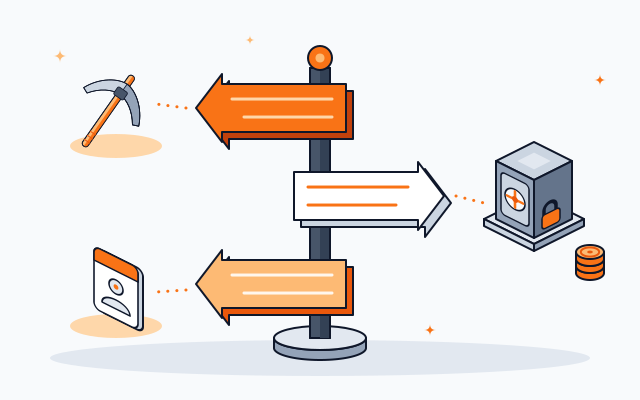
Mining, masternodes, then the algorithm.
Decide first whether people should mine your coin. If not, choose a staked or authority chain. If yes, decide whether you want masternodes (Dash). Then pick the mining algorithm: SHA-256 (Bitcoin, Bitcoin Cash) or Scrypt (Litecoin, Dogecoin).
Question 1: Should anyone be able to mine your coin with hardware?
NOEthereum, BNB Chain or Cosmos (chapter 4)
YESGo to 2
Question 2: Do you want plain mining, without masternodes?
NODash: mining plus masternodes
YESGo to 3
Question 3: Should Scrypt miners (the Litecoin and Dogecoin kind) mine it?
NOBitcoin, or Bitcoin Cash for bigger blocks
YESLitecoin, or Dogecoin for 1-minute blocks
Not sure whether to mine or stake? Proof of work vs proof of stake explains the trade-off in plain words.
CHAPTER 02
Bitcoin, Litecoin, Dogecoin, Bitcoin Cash and Dash compared
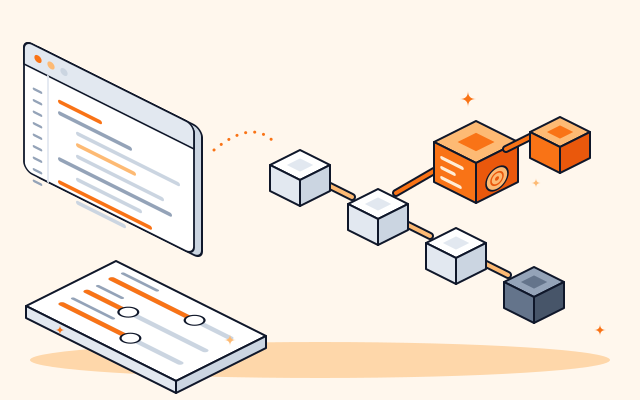
Five proof-of-work bases, from their own code.
All five are MIT-licensed, so you may fork them freely. Bitcoin and Bitcoin Cash target 10-minute blocks on SHA-256, Litecoin and Dash 2.5 minutes (Scrypt and X11), and Dogecoin 1 minute on Scrypt. Dogecoin's latest release is from 1 Dec 2024, so check each one before you choose.
| Base | Algorithm | Block time in its code | Latest release | Suits |
|---|---|---|---|---|
| Bitcoin | SHA-256 | 10 min | v31.1, 8 Jul 2026 | A plain, well-known coin; SHA-256 miners |
| Bitcoin Cash | SHA-256 | 10 min | v29.2.0, 2 Oct 2026 | Payments with big blocks (32 MB default) |
| Litecoin | Scrypt | 2.5 min | v0.21.5.8, 12 Sep 2026 | Faster blocks; Scrypt miners |
| Dogecoin | Scrypt | 1 min | v1.14.9, 1 Dec 2024 | A community coin with 1-minute blocks; Scrypt miners |
| Dash | X11 | 2.5 min | v23.1.8, 3 Aug 2026 | Mining plus masternodes that earn a share |
Block times from each project's chainparams.cpp (Bitcoin, Litecoin, Dogecoin, Bitcoin Cash Node, Dash); releases from GitHub; checked October 2026.
What each one brings
Bitcoin
The reference code everything else copies. Plain, heavily reviewed, frequent releases. Code: bitcoin/bitcoin.
Litecoin
Bitcoin's design with 2.5-minute blocks and Scrypt, plus the optional private MWEB extension. Code: litecoin-project/litecoin.
Dogecoin
Litecoin's lineage with 1-minute blocks. Its code supports merged mining, so Litecoin miners can mine it at the same time. Code: dogecoin/dogecoin.
Bitcoin Cash
Bitcoin's rules with a 32 MB default block size for cheap payments. Code: bitcoin-cash-node/bitcoin-cash-node.
Dash
X11 mining plus masternodes: 1000 DASH collateral and 60% of each block reward on Dash itself. Code: dashpay/dash.
CHAPTER 03
The risk a small mined coin inherits
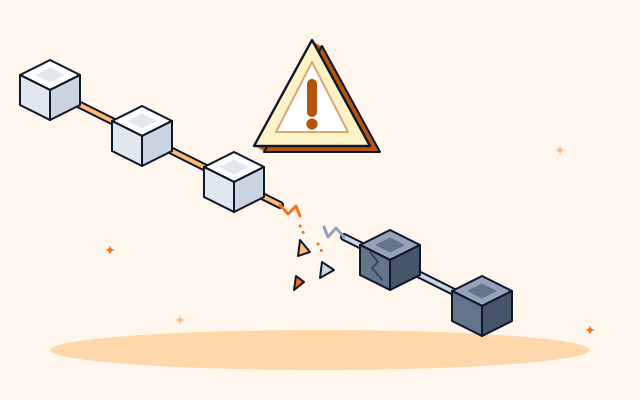
Sharing an algorithm with a giant means rentable attackers.
A new coin on SHA-256 or Scrypt shares its mining algorithm with far bigger coins, so someone can rent hash power by the hour and outmine your whole network. That is called a 51 percent attack. Plan your defenses before launch, not after.
This is not theory. In August 2020, two of three attacks on Ethereum Classic used hash power rented on a marketplace, per Decrypt (citing Bitquery). The attackers double-spent over $7 million. At the time, one hour of rented power was about $3,800 for Ethereum Classic against over $513,000 for Bitcoin.
A brand new coin has far less hash power than Ethereum Classic had, so it is cheaper still to attack. The more valuable your coin becomes, the more it is worth trying.
Ways to lower the risk
- Ask exchanges to wait for more confirmations before crediting deposits, which makes double spends harder
- Grow honest hash power with a mining pool and a fair launch
- Consider merged mining: Dogecoin's code supports it, so a big chain's miners can secure yours at the same time
- Or skip mining: a staked or authority chain cannot be outmined
CHAPTER 04
Forking a smart-contract chain instead
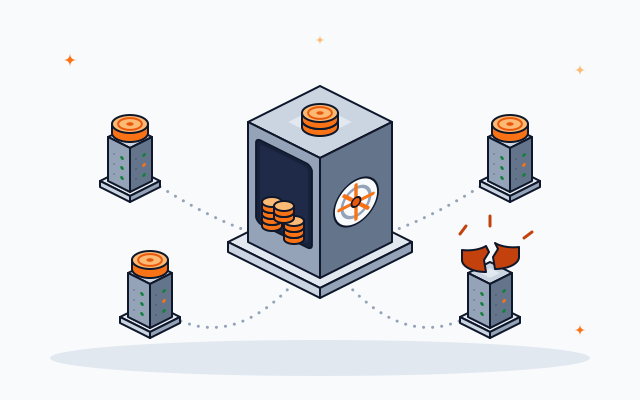
Ethereum, BNB Chain and Cosmos, for tokens and apps.
If your coin needs tokens, a swap or apps, fork an Ethereum-style chain: Ethereum or BNB Chain. Both work with MetaMask out of the box. Cosmos suits a staked chain that should connect to other Cosmos chains.
| Base | Code and license | Latest release | Suits |
|---|---|---|---|
| Ethereum | ethereum/go-ethereum, LGPL-3.0 | v1.17.10, 23 Oct 2026 | Tokens and apps; MetaMask and every EVM tool |
| BNB Chain | bnb-chain/bsc, LGPL-3.0 | v1.8.1, 16 Oct 2026 | The same tools with shorter default blocks |
| Cosmos | cosmos/cosmos-sdk, Apache-2.0 | active, 24 Oct 2026 | A staked chain with its own validators |
Licenses and releases from GitHub, checked October 2026.
On these chains there is no mining to attack. Blocks are made by validators you choose (proof of authority) or by holders who lock coins (proof of stake). Planning a chain only your company or partners run? See the private blockchain guide.
CHAPTER 05
Avalanche, Tron and Solana bases
Three more bases, each with its own guide.
You can also start from Avalanche (an L1 with its own validators), Tron (a network with block producers you run) or Solana (fast blocks with staking). Each has its own trade-offs and its own guide.
| Base | Code and license | Latest release | Guide |
|---|---|---|---|
| Avalanche L1 | ava-labs/avalanchego, BSD-3-Clause | v1.15.2, 22 Oct 2026 | Create an Avalanche L1 |
| Tron | tronprotocol/java-tron, LGPL-3.0 | GreatVoyage-v4.8.2.4, 22 Oct 2026 | Create a Tron blockchain |
| Solana | anza-xyz/agave, Apache-2.0 | v4.3.2, 15 Oct 2026 | Create a Solana blockchain |
From GitHub, checked October 2026.
CHAPTER 06
What each fork costs on HeroRPC
A one-time build price by base, plus the add-ons you pick.
On HeroRPC a fork is a one-time build price set by the base: $149 for Ethereum or BNB Chain, $199 for Bitcoin, Litecoin, Dogecoin or Bitcoin Cash, $249 for Dash or Cosmos. Add-ons such as a mining pool ($249) are extra, and hosting is shown before you pay.
| Bases | Build price |
|---|---|
| Ethereum, BNB Chain, Avalanche L1 | $149 |
| Bitcoin, Litecoin, Dogecoin, Bitcoin Cash, Tron | $199 |
| Cosmos, Dash | $249 |
| Solana | $399 |
Prices from our live price list. Every fork includes the chain itself; add-ons such as the explorer, wallets or a mining pool ($249, for mined coins) are optional.
Doing it yourself instead? How to fork Bitcoin walks through the code changes, and the genesis block guide covers the first block.
QUESTIONS
Forking questions
What is the best coin to fork?
For a mined coin, Litecoin or Bitcoin; for masternodes, Dash; for tokens and apps, an Ethereum-style chain. Pick the base whose features you need, because supply, block time and rewards can be set in any fork.
Is it legal to fork Bitcoin or Litecoin?
The code is MIT-licensed, which allows copying, changing and distributing it if you keep the license notice. Using the Bitcoin or Litecoin name or logo for your coin is a different matter: pick your own name.
Should I fork Bitcoin or Litecoin?
Both are close relatives. Litecoin uses Scrypt and 2.5-minute blocks; Bitcoin uses SHA-256 and 10-minute blocks. Choose by which miners you want, since block time is a setting you can change.
Can I change the mining algorithm when I fork?
In principle, yes, but it is deep code work and the algorithm comes with mining hardware, pools and software support. Starting from a base that already uses the algorithm you want is far simpler.
Why fork instead of creating a token?
A fork gives you your own blockchain: your own rules, fees, explorer and wallets. A token lives on someone else's chain. Coin vs token compares the two.
Are forks of small coins safe?
Mined forks can be attacked with rented hash power while they are small. Exchanges counter this with more confirmations; you can grow honest mining, use merged mining where the code supports it, or choose a staked chain.
ABOUT
How we made this guide
In October 2026 we read each project's GitHub repository through GitHub's own API (license and latest release), the block rules in Bitcoin's, Litecoin's, Dogecoin's, Bitcoin Cash Node's and Dash's chainparams.cpp, Dash's documentation, and Decrypt's 2020 report on rented hash power. Build prices come from our live price list.
Written by
Written and checked by the people who run HeroRPC's builder and node servers. Every figure links to its source.
Published . Last updated .
Fork the base that fits
Pick a base, set your supply and block time, and launch your own chain from $149 one-time.