Quick answer
The short answer
Tokenomics is the economic design of a coin: its maximum supply, how new coins are created (block rewards and halvings), who gets coins at launch (a premine, if any), and when locked coins are released (vesting). For a coin with its own blockchain, most of it is set in the chain's supply rules, so it is hard to change once people use the coin.
| Decision | The question | Bitcoin's answer |
|---|---|---|
| Supply cap | Will there be a maximum number of coins? | Yes, slightly less than 21 million |
| Emission | How are new coins made? | A block reward for miners |
| Halving | Does the reward shrink over time? | Yes, cut in half every 210,000 blocks |
| Launch distribution | Does anyone get coins on day one? | No premine |
| Vesting | Are some coins locked and released later? | None, there is no premine to lock |
Each of these changes how the coin behaves for years. Here they are with real numbers.
CHAPTER 01
Supply: a hard cap or a supply that keeps growing
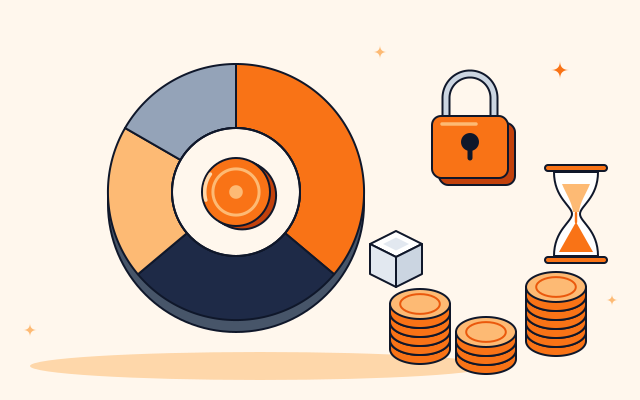
Bitcoin has a cap. Dogecoin does not. Both work, and each tells a different story to your community.
First, three terms that sites use for supply. CoinGecko defines them in its supply methodology:
- Ceiling
Max supply
The most coins that can ever exist, coded into the rules. Some coins have none.
- Created so far
Total supply
Coins created, minus any that were permanently removed (burned).
- Trading now
Circulating supply
The part that is actually available. Locked and vesting coins are left out.
Now three real coins with three different answers. The numbers come from each coin's own rules:
| Chain page | Bitcoin | Litecoin | Dogecoin |
|---|---|---|---|
| Maximum supply | Slightly less than 21 million | About 84 million (50 coins x 840,000 blocks x 2) | No cap |
| Block time target | 10 minutes | 2.5 minutes | 1 minute |
| Halving interval | 210,000 blocks | 840,000 blocks | Halved up to block 600,000, then a constant reward |
| Current reward rule | 3.125 coins since April 2024 | Halves every 840,000 blocks | 10,000 coins per block, from block 600,000 |
Bitcoin from the Bitcoin Wiki and bitcoin.org. Litecoin and Dogecoin from their Core source code on GitHub. The Litecoin cap is our own sum from those rules: 50 x 840,000 is 42 million for the first period, and the periods that follow add up to the same again.
- A hard cap
Scarcity is the promise
People can check that no more coins will ever be made. Good for a store-of-value story.
- No cap
Steady rewards are the promise
Miners are always paid, and new coins keep arriving at a known pace. Good for a coin meant for spending and tips.
CHAPTER 02
Emission: how new coins are made, and halvings
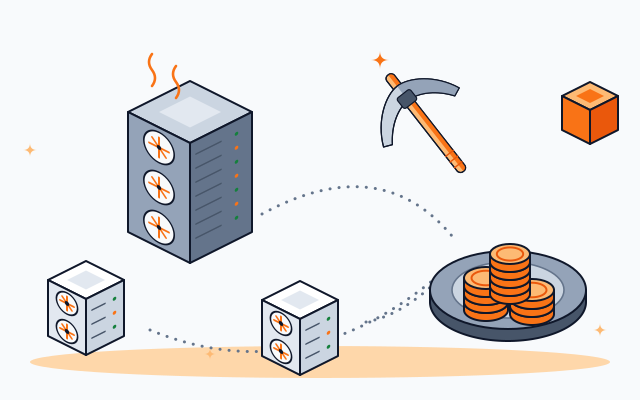
New coins come from block rewards. A halving cuts the reward on a schedule. Bitcoin's full history, with dates.
On a proof of work chain, the block reward is the number of new coins paid to whoever adds a block. A halving is a scheduled cut of that reward by half. Bitcoin halves every 210,000 blocks, about every four years. Here is every cut so far, from the Bitcoin Wiki:
- 3 January 2009
50 coins
Block 0: where it all started.
- 28 November 2012
25 coins
The first halving, at block 210,000.
- 9 July 2016
12.5 coins
The second halving, at block 420,000.
- 11 May 2020
6.25 coins
The third halving, at block 630,000.
- 20 April 2024
3.125 coins
The fourth halving, at block 840,000.
The next ones are estimated, because the date depends on how fast blocks actually arrive: 1.5625 coins around 2029, 0.78125 around 2033 and 0.390625 around 2037. The Bitcoin Wiki estimates the last coin will be mined around 2140.
Proof of stake coins pay validators in a different way, but the same questions apply: how many new coins per year, and does the rate fall? The supply calculator below works for any of these. Pick a preset, or type your own rules:
CHAPTER 03
Inflation: work out how fast supply grows
Inflation here means new coins as a share of the coins that exist. It is simple arithmetic from your rules.
For a coin, inflation is simply how much the supply grows in a year, as a share of the supply that exists at the start of that year. The formula needs three numbers: blocks per year, reward per block, and the supply so far.
- Blocks per year = 365 days x 24 hours x 60 minutes, divided by the block time in minutes. At 10 minutes that is 52,560.
- New coins per year = blocks per year x reward per block.
- Inflation = new coins per year divided by the supply at the start of the year.
| Period starts at | Reward | Supply at that block | New coins a year | Growth in a year |
|---|---|---|---|---|
| Block 210,000 | 25 | 10,500,000 | 1,314,000 | 12.5 percent |
| Block 420,000 | 12.5 | 15,750,000 | 657,000 | 4.2 percent |
| Block 630,000 | 6.25 | 18,375,000 | 328,500 | 1.8 percent |
| Block 840,000 | 3.125 | 19,687,500 | 164,250 | 0.8 percent |
Worked out from the reward history above, assuming a block exactly every 10 minutes. Real blocks arrive a little faster or slower, so real figures differ slightly. The supply at each block is each earlier reward times 210,000 blocks, added up.
See the pattern: each halving roughly halves the inflation rate, because the same supply is getting half as many new coins. A coin with a constant reward behaves differently, and Dogecoin shows how:
| If the supply is | New coins a year | Growth in a year |
|---|---|---|
| 100 billion | 5,256,000,000 | 5.3 percent |
| 150 billion | 5,256,000,000 | 3.5 percent |
| 200 billion | 5,256,000,000 | 2.6 percent |
Example supplies, not Dogecoin's current supply. Issuance is 10,000 coins x 1,440 one-minute blocks a day x 365 days, from the Dogecoin Core code.
The number of new coins stays the same, but the rate keeps falling as the supply grows. So a constant reward is not the same as constant inflation. That is useful when you talk to your community: you can say exactly how much supply will grow, and why the rate shrinks.
CHAPTER 04
Distribution: who gets coins at launch
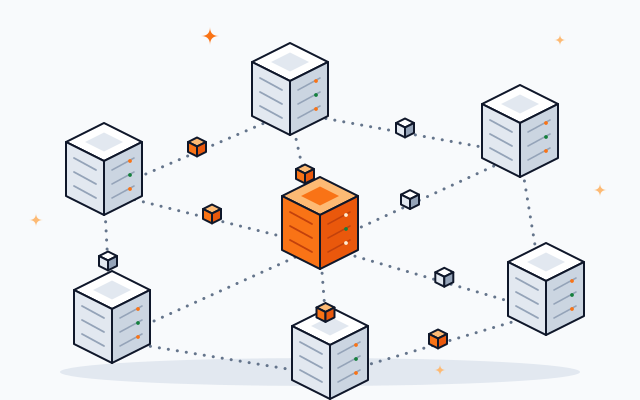
Fair mining, a premine, a team share: each is a trust choice. Disclose it, or expect the community to find it.
There are only a few ways coins can reach people at the start, and a coin can mix them:
- Open
Mined or earned
Everyone has the same chance. Bitcoin works this way, with no premine.
- Planned
A premine
Some coins are created at launch for the founders, a treasury or a giveaway. Fine when small and public.
- Split
A mix
A small premine to fund the project, with the rest earned by miners or validators.
The premine is where trust is won or lost. Communities accept a small one that is explained. They walk away from a large hidden one, and on a public chain it is easy to find, because every wallet is visible on the explorer. The honest way is to disclose it first:
- Say the size as a share of the total, on your website, before launch.
- Say what it is for: development, hosting, a reserve, a giveaway.
- Publish the wallet addresses, so anyone can watch them on the explorer.
- Send it to a wallet you control, never to an exchange deposit address.
- Say what you will not do, for example that you will not sell the founder share for a set time.
Here is how that looks in a table. This is a made-up coin, shown only as an example:
| Who gets it | How | Coins | Share |
|---|---|---|---|
| Miners | Block rewards over the first two years | 10,512,000 | 91.3 percent |
| Founders | Premine, in a wallet published on the explorer | 1,000,000 | 8.7 percent |
Example: not a real coin. 10,512,000 comes from a 10 coin reward x 1,051,200 blocks (two years of one-minute blocks). The worked example in chapter 6 explains the whole schedule.
CHAPTER 05
Vesting and lockups, in plain words
A way to promise that founders and early backers cannot dump their coins on day one.
A lockup holds some coins back. Vesting is the schedule that releases them. Both aim at the same worry: that the people who got coins early will sell them all at once and the price will fall. CoinGecko's guide to vesting schedules describes the two pieces most schedules use:
- The wait
A cliff
A period when nothing is released. Someone who leaves before the cliff ends gets nothing.
- The release
Linear vesting
After the cliff, coins are released in even amounts at regular intervals.
CoinGecko gives one example: a project reserved 15 percent of its token supply for the team, and released it evenly over one year, at about 1.25 percent of the total supply each month. Locked and vesting coins also stay out of the circulating supply, which is why a large locked share can make a coin look smaller than it is.
- Day 1
Coins are created
The founder share exists, in a published wallet.
- Months 1 to 6
Cliff
Nothing moves. The community can see the wallet stay still.
- Months 7 to 24
Linear release
The founder share is released in equal parts each month.
CHAPTER 06
A worked example: design a coin end to end
One hypothetical coin, with every number worked out, plus the mistakes to avoid and how to enter it in the builder.
Here is a made-up coin, "ExampleCoin". Every number below is computed from its rules, so you can swap in your own.
| Setting | Value | Why |
|---|---|---|
| Block time | 1 minute | Fast enough for payments, which gives 525,600 blocks a year |
| Block reward | 10 coins | Round and easy to explain |
| Halving interval | 1,051,200 blocks | Exactly two years of blocks |
| Premine | 1,000,000 coins | Small, public and for development |
| Cap from mining | About 21,024,000 coins | 10 x 1,051,200 for the first period, and the later periods add up to the same again |
Example: not a real coin. Supply stays below 22.03 million, and the premine is under 5 percent of that.
| Year | Reward | New coins | Supply at year end | Growth in the year |
|---|---|---|---|---|
| 1 | 10 | 5,256,000 | 6,256,000 | Not meaningful: starts from the premine |
| 2 | 10 | 5,256,000 | 11,512,000 | 84.0 percent |
| 3 | 5 | 2,628,000 | 14,140,000 | 22.8 percent |
| 4 | 5 | 2,628,000 | 16,768,000 | 18.6 percent |
| 5 | 2.5 | 1,314,000 | 18,082,000 | 7.8 percent |
| 6 | 2.5 | 1,314,000 | 19,396,000 | 7.3 percent |
| 7 | 1.25 | 657,000 | 20,053,000 | 3.4 percent |
| 8 | 1.25 | 657,000 | 20,710,000 | 3.3 percent |
Example: computed from the rules above, with exactly one-minute blocks. Growth is new coins divided by the supply at the start of the year.
Read the table like a story you would tell your community: the early years have fast growth because the coin is young. By year 5 it is under 8 percent a year, and the rate keeps falling after that. Everyone can check it, because it is just arithmetic.
Hiding the premine
The community will find it on the explorer anyway.
A reward that is too high
The first years are pure inflation, and early miners hold most of the supply.
Halving too early
Miners leave before the network is secure.
Changing the rules later
Every node must upgrade at once (a hard fork). Decide before launch.
Ready to try your own numbers? Use the calculator in chapter 2, then enter them in the builder. A coin with its own blockchain starts at $149 one-time, and you see the full price in the builder. It deploys in about 30 minutes once payment is confirmed. Our complete guide to creating a cryptocurrency covers the rest of the launch, and how to create a meme coin shows how a lighter, joke-led coin handles the same choices.
QUESTIONS
Questions people ask
What is tokenomics?
Tokenomics is the economic design of a cryptocurrency: how many coins exist, how new ones are created, who receives them and when they are released. For a coin with its own blockchain, the main levers are the maximum supply, the block reward, the halving schedule and any premine.
What is the difference between max supply, total supply and circulating supply?
Max supply is the most coins that can ever exist. Total supply is what has been created, minus anything permanently burned. Circulating supply is the part actually available, which leaves out locked and vesting coins. CoinGecko defines all three in its supply methodology.
Is a capped supply better than an uncapped one?
Neither is better for every coin. A cap like Bitcoin's (slightly less than 21 million) supports a scarcity story. An uncapped coin like Dogecoin, which pays a constant 10,000 coins per block from block 600,000, supports a coin meant for spending. Choose for your purpose.
How does a Bitcoin halving work?
The block reward is cut in half every 210,000 blocks, about every four years. It went from 50 coins in 2009 to 25 in 2012, 12.5 in 2016, 6.25 in 2020 and 3.125 in April 2024.
What is a premine?
A premine is a share of the supply created for the founders at launch. Communities accept a small one that is explained and published, and distrust a large or hidden one. Bitcoin has none.
What is token vesting?
Vesting is a schedule that releases locked coins over time, usually after an initial waiting period called a cliff. It is meant to stop founders and early backers from selling everything at once.
How do I calculate the inflation rate of a coin?
Multiply blocks per year by the reward per block to get new coins per year, then divide by the supply at the start of the year. At 10 minute blocks there are 52,560 blocks a year. Our supply calculator in chapter 2 does this for your own rules.
Can I change my coin's tokenomics after launch?
Only with a hard fork, which every node must adopt. That is hard to do once people use the coin, so decide the supply, reward and halving before launch.
SOURCES
Sources and how we made this guide
- Bitcoin Wiki, Controlled supply (block reward history and dates, 210,000 block halving, supply cap, final coin around 2140, future halving estimates)
- bitcoin.org FAQ (21 million maximum supply)
- Bitcoin Core source code, chain parameters (halving interval and 10 minute block target)
- Litecoin Core source, chainparams.cpp (840,000 block halving interval, 2.5 minute blocks, 50 coin starting reward)
- Dogecoin Core source, chainparams.cpp (one-minute block time target, halving interval)
- Dogecoin Core source, dogecoin.cpp (constant 10,000 coin reward after block 600,000)
- CoinGecko, supply methodology (max, total and circulating supply; locked and vested coins excluded from circulating)
- CoinGecko Learn, vesting schedules (vesting, cliff, linear vesting and the 15 percent team example)

Written by
Written and checked by the people who run HeroRPC's builder and node servers. Every figure links to its source.
Published . Last updated .